
Proudly a part of the fabric of Palm Beach County, Florida since 1910, we began building boats for the same reason we continue today – to improve on what is on the water. What began as a commercial fishing operation and a small boat repair business has since evolved into the builder of the world's premier sportfishing yachts, unrivaled in design and finish, and synonymous with innovation and the pursuit of perfection. While our family business has operated at different locations and with different names over the years, we have always subscribed to the same philosophy: Listen, think, and create. That philosophy is grounded in hard work, a dedication to our craft, and the partnership that we forge with every customer that puts their trust in us.
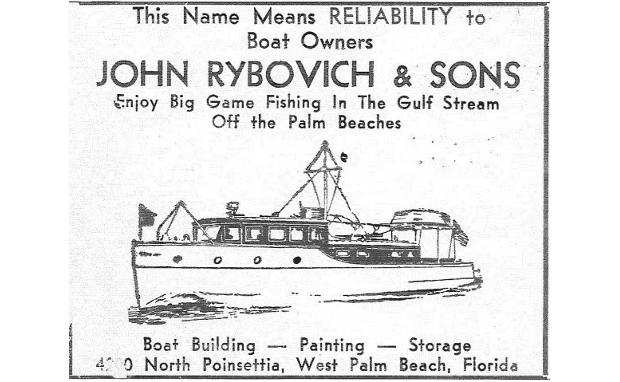
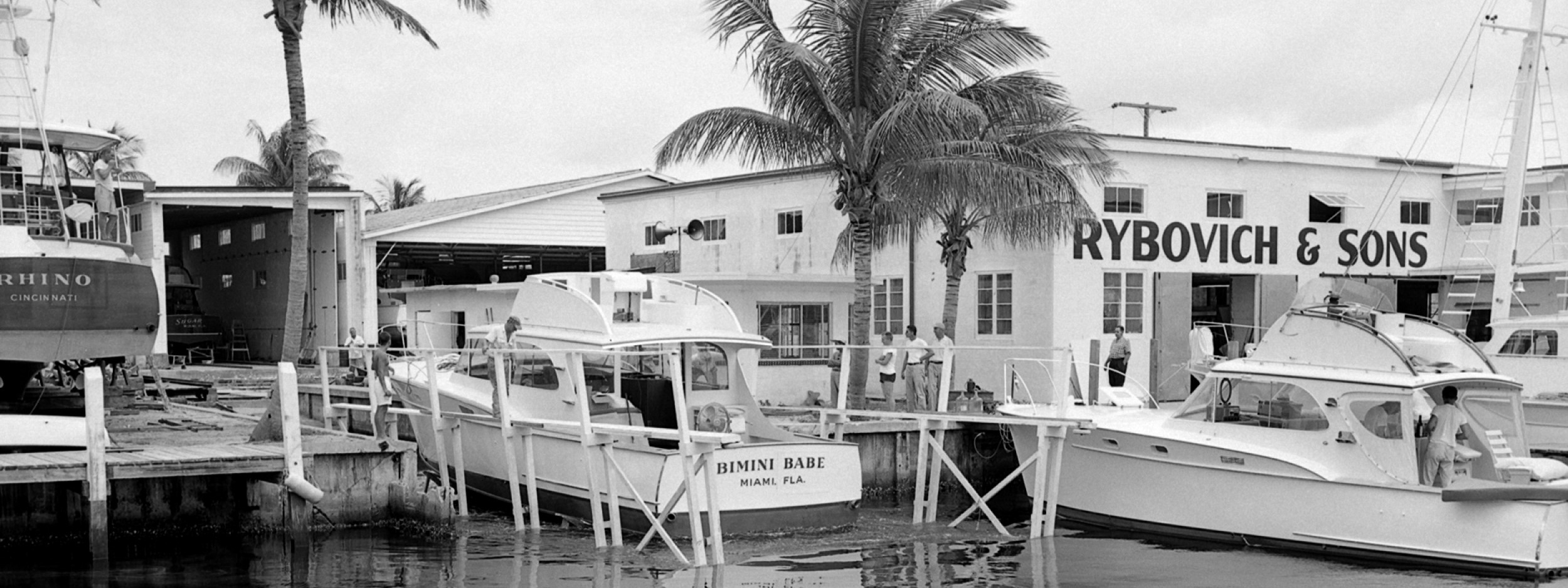
In 1919, John "Pop" Rybovich started his small commercial boat repair yard when he moved from commercial fishing to servicing the boats of the early commercial fishing fleet of the Palm Beach area. The West Palm Beach yard quickly gained a reputation for its skill and attentiveness, and as the sportfishing concept of the 1930's grew in popularity, Pop and his three sons, Johnny, Tommy and Emil, were at the center of a new industry converting the power cruisers of the nearby Palm Beach elite to chase Sailfish just outside Lake Worth Inlet.
Following the return of Johnny, Tommy and Emil from World War II, each with the skills they had developed overseas, the idea was born to build a boat dedicated to sportfishing. In 1947, that idea became a reality, and the first custom sportfishing boat, Miss Chevy II, was launched. In the years that followed, the sport that was their passion as well as their livelihood grew in popularity, and the boys grew with it, honing their skills and working with owners to build a better-riding, more innovative and more beautiful boat.
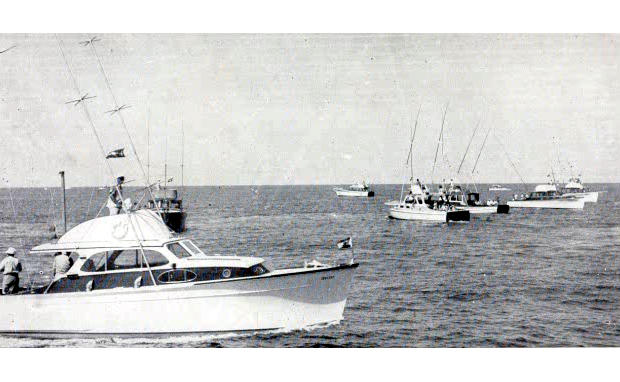
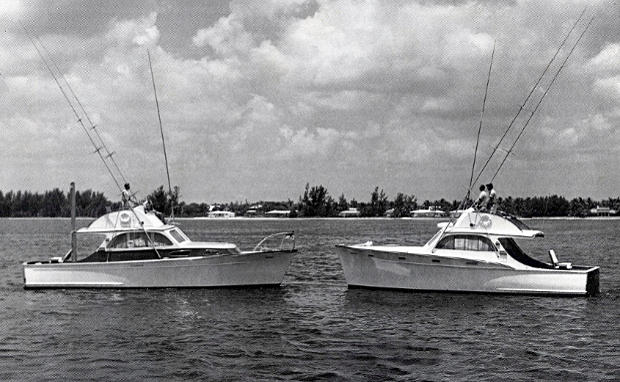
From 1947 to 1972, the brothers launched 75 hulls, each better than the last and each with their own unique character and innovations. Johnny, the fisherman, brought new ideas and oversaw management, Tommy, the designer and builder, oversaw the carpentry and painting trades, and Emil, the engineer, directed all mechanical and electrical work in new construction as well as in service. Of the three dedicated brothers, it was Tommy's obsession with his work that became legendary and provided the energy and inspiration in the yard's incessant quest for perfection. However, two years after the passing of the family patriarch, Pop Rybovich, Tommy Rybovich passed from cancer in 1972. The soul of the yard, and the head of design and hull building, had passed far too young at the age of 52.
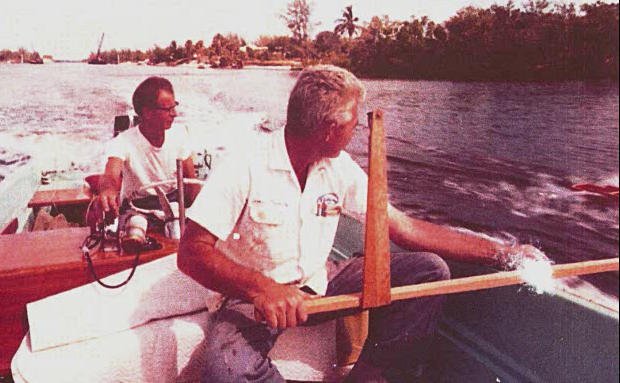
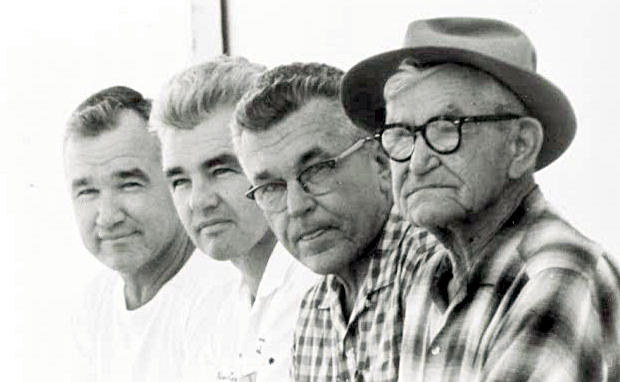
By the time of the sale in 1975, Michael Rybovich, Emil’s son and the next generation of Rybovich boat builders, was working at the family boatyard developing his skills as a carpenter, while fishing when the time allowed. The new owner, Bob Fisher, insisted that Johnny and Emil (and Michael) continue working at their family’s business. But, by 1980, both Johnny and Emil found the changes were too much for their liking and decided to part ways with the business – around this time, Michael became the head boat builder.

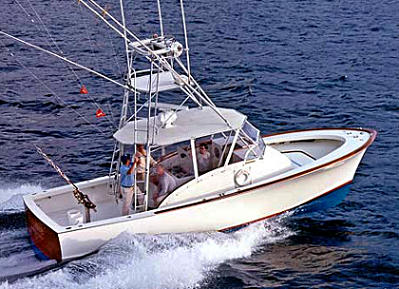
In 1984, Michael, too, decided to leave and with his father, Emil, his brother, Marty Evans, and family friend, Ed Bussey, started a boat building company called Rybovich International with the goal continuing to innovate the world of sportfishing and build a better boat. The first of those new hulls was Ruthie, a 32' Walkaround built for Charlie Bouchard, based on a concept that legendary angler, Nick Smith, had applied to a 30' Daytona. The boat proved a great fishing platform and, with her new bottom, could fish in rough water alongside boats twice her size.
Following the second sale of the original family business in 1986, a lawsuit forced Rybovich International to abandon their name, as well as the "Rybovich signature" broken sheer and double handrail designs. Vowing to continue on and not wanting to get involved in a lengthy legal battle, Ryco Marine was born. The trend of building larger sportfishing boats continued, and by the mid-1990's, Ryco Marine was building boats into the 60' class.
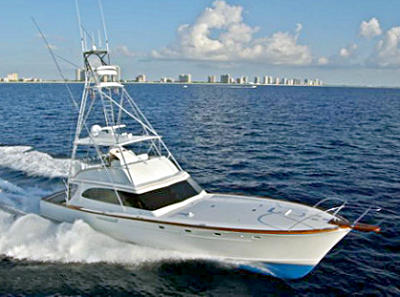
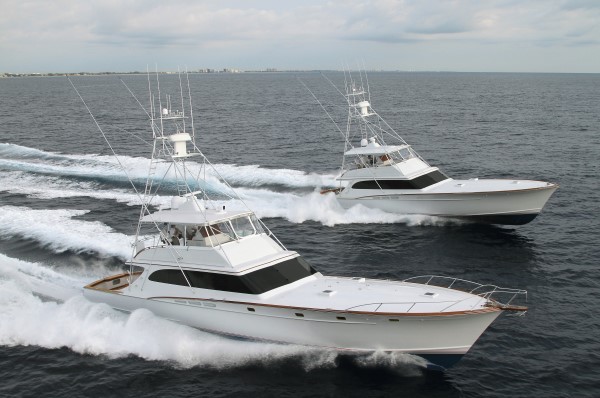
By the early 2000s, the original family business was in the hands of H. Wayne Huizenga Jr., the fourth owner since the family sold the business in 1975. In 2005, following Hurricane Wilma and extensive damage to the Ryco Marine facility, a partnership was formed and Michael joined with Huizenga – a Rybovich was once again building Rybovich boats under the Rybovich name. For the next four years the new company flourished, and during this time, Rybovich & Sons delivered five boats from 54 to 78 feet, the last two being the largest ever built under the family name. As the world recession deepened in 2008, the once full order book became an empty testament to the bad economy. In early 2010, management was forced to make several difficult decisions, including shelving new construction altogether to focus on the development of a full-service super yacht marina at the Riviera Beach site.
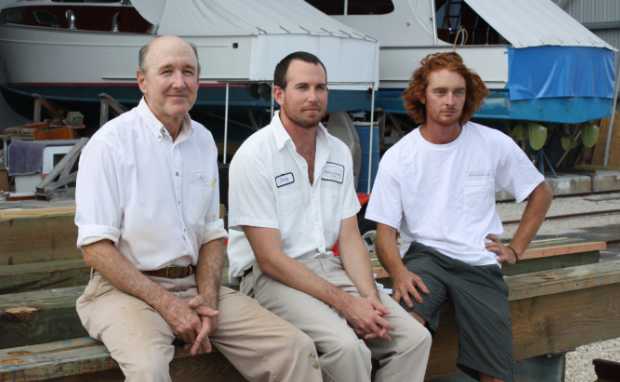
Following the Great Recession of 2008 and a desire to focus on a super yacht marina and service yard, the partnership with H. Wayne Huizenga Jr. was amicably dissolved, and the search for a new home began. Soon after, the most recent rebirth of the Rybovich boat building name came to fruition when Michael and his wife Julia (with the help of family friend, Larry Wilson) purchased the old E&H Boat Works in Palm Beach Gardens, FL and opened Michael Rybovich & Sons Custom Boat Works. Today, we operate as a family business dedicated to the same ideals of innovation and the pursuit of perfection that helped build the Rybovich name. Michael, along with his two sons, Dusty Rybovich and Alex Gill, and the most talented crew in the industry, strive to carry on a tradition that started more than 100 years ago in a small boatyard in West Palm Beach.
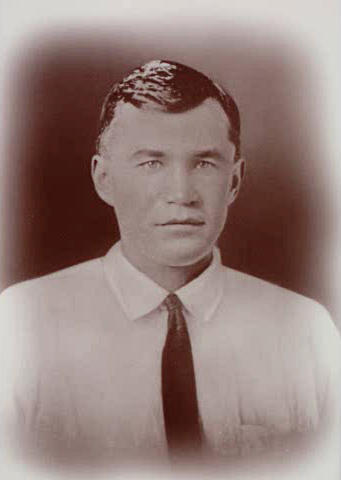
 No matter how you feel about the current immigration issue, one area in which I'm sure we are all in agreement is that the mass immigration from Europe and Asia in the late 19th and early 20th centuries was the foundation upon which the industrialized United States of America was built. Individuals and whole families left their native lands fleeing oppression, unemployment, and poverty to seek the new frontiers and opportunity that seemed all but guaranteed in the new world. Perseverance and a strong back were the only prerequisites for procuring a better life than the one left behind. It was on this premise that my grandfather, John Rybovich Sr, set out in 1900 at the age of 16 from his native Austro-Hungary (which would become known as Yugoslavia after WW I).
 John was a carpenter by trade. He brought with him his skills and the clothes on his back, entering this country through Ellis Island and on into New York where he found work in the building trade. Not long after securing work and living arrangements, he began to hear stories of a tropical paradise in a place called Florida where a man named Flagler had built a railroad to bring the rich and all they required to a winter playground named Palm Beach. John set his sights on heading south as soon as possible, a feat which would take almost ten years to achieve. In 1910 he made his way to Palm Beach. The area was booming with the construction on the Island of winter homes for the northern blue bloods, and a town to support their every need was taking shape on the western shore of Lake Worth. Things seemed to be falling into place for the young, single carpenter. Unfortunately, he soon discovered that the Island residents did not appreciate the annoyance created by the clatter of carpentry tools and passed an ordinance restricting the noise associated with construction during the winter months. John realized he could not survive without work for an entire season and decided an alternative method of income was in order. He reasoned that he was surrounded by water so what better way to earn his keep than becoming a fisherman. He decided that if he was going to succeed in this new venture it would have to include a partner to look after things at home while he was out on the water all day. John figured the best way for him to find a compatible wife from a similar background was to return to New York. He headed north seeking temporary work and permanent companionship and returned to Florida in 1911 with a young Czechoslovakian girl by the name of Anna Pollack as his new bride. They rented a small house in West Palm Beach and began their new life in the fishing business.
 A year and a half after moving back to Florida, their first child (a son John Jr) was born in 1913. Three years later a daughter, Ethel, was born followed by a second son Thomas in 1919. It became obvious that the family would require more room than the small apartment in town. John's business was also in need of more space for storing nets, boats, and the gear associated with a commercial fishing operation. John and Anna bought their first house in 1919 north of town on the shore of Lake Worth. The location allowed John space enough to store and maintain equipment and provided Anna with room to raise the children and keep several milk cows. In 1923 a third son, Emil, was born followed by a second daughter, Mary Irene, two years later. Fishing provided the family with enough to survive and John used his carpentry skills to keep the house and his boats in good repair.
 Not long after John set up shop along the shore, other local fisherman began to appreciate his skills at building and maintaining his own small fleet of skiffs. They soon began to bring their own boats to John for repairs and modifications. In time he discovered that not only was he spending fewer hours each day tending his nets, but also that he could make a better living in the boat repair business than he could fishing and so decided to reconfigure the homestead into a small boatyard. Although it had never been his intended vocation, it all seemed to make sense—as if it was meant to be.
 For the next 20 years, the business slowly grew into a respectful service yard. Devastation by several major hurricanes, including the killer Storm of 1928, only strengthened the family's resolve. In each destructive aftermath, the yard and the family home were rebuilt stronger and somewhat larger than before. The depression years presented many challenges. John somehow maintained a small but steady repair clientele and managed to grow his yard crew to ten to twelve employees through the difficult years. During those years his oldest son John Jr. began working in the yard alongside his father, beginning at the age of ten. Being the oldest of the children, more was expected of Johnny. At the age of sixteen he quit school and became a full-time employee, working long hours helping to build the yard into a successful operation. It was in these early years that Johnny acquired his own taste for fishing and laid the ground work for great things to come.
 Johnny learned to fish by helping his father. One of his first jobs as a kid was to catch bait for the growing number of customers who were taking an interest in fishing as a sport. In 1931 John Sr., affectionately known as "Pop" to the kids and later to customers and Captains alike, took in as payment on a yard bill a 26' yacht tender originally owned by the Phipps family. The boat was in need of repair and Johnny set about fixing it up in a manner in which he felt practical for fishing. In her, he caught his first Sailfish and became, shall we say, hooked. The many hours Johnny spent fishing for fun in that boat awakened him to the idea that a boat could and should be able to be set up specifically for "sport fishing".
 At the time, a significant amount of the work being done in the yard was devoted to converting the existing cruisers of that era to a more practical arrangement for local captains to take their charter clientele out for a day of fishing in the relatively untapped resource of the local Atlantic waters. In his 26' tender, Johnny developed and installed his first set of outriggers from Calcutta Bamboo and learned at which position and angle to mount them to make them most effective. He built and installed his first fighting chair, crude by today's standards, but practical. As his interest in the sporting side of fishing led to innovation, the ideas were quickly applied to customers' boats, which further laid the foundation for the yard's success and established the Rybovich yard as the place to come to for the latest in sport fishing applications. A growing number of boats owned by Palm Beach's well-to-do sportsmen were outfitted with riggers, fishing chairs, gunwale mounted rod holders and topside-mounted controls to create a more effective fishing platform. It was becoming very clear that these guys were on to something.
 The pursuit of ever larger game created a need for specialized fishing tackle as well as customizing one's boat. The tackle in use at the time was designed for smaller game and could not be relied upon to get the fish to the boat before the sharks attacked. Zane Grey, Michael Lerner, Kip Farrington and others were introducing the world through their writings to big game fishing adventures. Many of these fish that were written about were believed to be un-catchable on rod and reel. South Florida fishing captains such as Tommy Gifford, the Cass brothers, Lloyd Knowles and others were on the cutting edge of making it all happen as big game fishing's focus in the 1930's shifted from California to Miami and the east coast.
In 1934, Gifford, the Cass brothers, Bill Fagen, and Lloyd Knowles collaborated in the design and building of a reel that would stand up to the stress of hooking and landing large Marlin and Tuna. This reel became known as the Knowles Tuna Reel. In 1935, Ernest Hemingway landed the first un-mutillated Giant Bluefin Tuna in the Bahamas. In 1936, Fred Grieten applied for a patent for the first Fin-Nor fishing reel, which was built to Tommy Gifford's specifications. In the 1930s, Frank O'Brien designed and built the Tycoon Bimini King rod which would provide the mount and the leverage for the new reel technology. The new equipment provided sportsmen with the means and the advent of the 1939 Cat Cay Tuna Tournament provided the arena. In 1937 Johnny was invited to fish Bimini and Cat Cay with a local captain and landed his first Blue Marlin. Two years later he landed his first Giant Bluefin. Johnny was beginning to realize the desperate need for a boat designed and built specifically for big game sport fishing but the realization of that concept would have to wait. His country would soon need his and his brothers' services for bigger fish.
 In 1941 the United States entered World War II. The first of the Rybovich boys to be called to serve was Tommy. He was drafted into the Army Air Corps and soon after, Emil volunteered. Tommy flew B-17 bombers and received the Distinguished Flying Cross for flying his flak-battered airplane back to base with the control cables shot out to save the lives of his injured crewmembers who could not have survived parachuting from the crippled bomber. Emil also served in the Air Corps on air-sea rescue boats rescuing downed airmen and keeping the boats in mechanical readiness. Johnny was finally drafted in 1943 and served as a procurement officer for the Army, spending most of his duty in the Midwest in the engineering division for the Army's chief of transportation.
It is clear that all three young men developed an even greater interest in the family business and acquired an education in their respective special talents while in their country's service. Johnny's service taught him business skills and introduced him to the emerging material technology in Military hardware. Emil, a self taught mechanical engineer, was exposed to the engineering and performance standards within the fleet of Army boats for which he was responsible. Tommy was absorbed with aerodynamics, aircraft construction, and the beauty and efficiency of a clean line which is so important in aircraft design. The combination of these skills post war would prove to be a study in excellence.
 While the boys were away, Pop kept the business going even without the help of his cheap family labor. Standard contracts were for converting civilian pleasure-craft to military duty and repairs to and maintenance of smaller military patrol boats and launches. Daughters Ethel and Mary Irene pitched in to help keep the yard operating during the war years. When the brothers returned from service, Pop was ready to turn over control of the yard to his sons. Work was plentiful, re-converting requisitioned pleasure craft back to civilian use, and outfitting boats for sport fishing operation. The Rybovich boys picked up where they had left off before the war and discussions resumed on the possibility of building a pure bred sport fishing boat. Opportunity came calling in the form of a former customer by the name of Charlie Johnson. Johnson was a big game fisherman and wanted something special. In 1946 he approached the boys with a proposal to build a new boat for Tuna fishing. His only request was that the length not exceed 34'. The rest of the design parameters were left up to the three young, soon-to-become boat builders.
 It was Johnny, drawing on his extensive fishing experience, who supplied the basic conceptual design. Tommy, the most artistically talented of the three took Johnny's concept and wrapped it in a graceful, modern skin of high-gloss paint and varnished mahogany. Emil installed a pair of eight-cylinder Chryslers with aircraft style steering, instrumentation, and full dual-station controls. Launched as Miss Chevy II in 1947, she was a masterpiece accomplished on the first attempt by the family collaboration. She was dry, stable, and fast and was outfitted with the world's first set of aluminum outriggers and a fighting chair that is still the print and pattern for today's chairs.
 Wherever Miss Chevy went, she became the center of attention. Shortly after taking delivery, Charlie Johnson took the boat over to fish the Cat Cay Tournament. She was again the center of attention not only for her unique look but also for her incredible speed—in excess of 20 knots. Soon after, an order for a second boat was placed by Tony Accardo (legendary hit man of Al Capone) with the second boat to be built in 37'. Clari-Jo was launched in 1949 and over the next two years three 28-footers and two more 37s were completed for yard customers who wanted something special. Only subtle changes were made to the original design which would define the evolutionary process with few exceptions for years to come. It appeared as if the family would be able to continue building boats for a limited number of sportsmen. It never occurred to them that soon customers from the world over would be standing in line for years at a time to get their own crack at owning a Rybovich.
 As a result of the success the yard was enjoying from its innovative new sport-fishing boats, the service and repair business grew quickly. The number of yard employees increased along with the number of paying customers and the management required for the growing company was now in Johnny's hands. Tommy assumed the role of designer and builder and oversaw the carpentry and painting trades in service. Emil directed all mechanical and electrical work in new construction as well as in service.
Of the three dedicated brothers, it was Tommy's obsession with his work that became legendary and provided the energy and inspiration in the yard's incessant quest for perfection. He worked from eight in the morning to eight at night, went home for dinner and returned to the yard, typically working until eleven p.m. and beyond. Sundays were half-days to allow time for the family. With no formal training in naval architecture, Tommy's early designs were based on known lengths, beams, and displacements of similar vessels that were accessible in the service yard. Suffice it to say that from the waterline up, the design was all his.
 As time went on, Tommy Rybovich became increasingly resistant to input from others, including his brothers, when it came to his designs. His artistic talents and his stubborn nature along with his firm belief that a boat should never be designed or built by committee, established his reputation for being unreasonable when dealing with family or customers. It is therefore surprising that the shear-line that became the identity of the Rybovich hull was born out of a simple pencil stroke by brother Johnny, one quiet afternoon in 1951.
 Charles Johnson had fished Miss Chevy II for four years and wanted something new. Tommy had been experimenting with an idea he had for eliminating the forward trunk by raising the foredeck to create the headroom needed down below and in doing so, clean up the line of the deckhouse. While Tommy was busy in another part of the yard, Johnny was in the drawing room intrigued by his brother's attempt. He erased the latest version of the sheer and sketched in one with a convex transition similar to what Chris-Craft had done in the late forties. Oddly enough and quite out of character, Tommy noticed the modification when he returned to the drawing room the next day and embraced the idea. Once again a collaborative effort would result in innovation and recognition that would keep the customers standing in line. In 1952 Miss Chevy IV was launched with a "broken sheer", an aluminum tuna-tower, and a transom or tuna door for boating big fish without hauling them over the side with a Gin-pole. Once again the Rybovich boys had delivered a boat that would define the next phase of sport-fishing.
 Prior to Miss Chevy IV, all the boats built at the yard had been carvel planked with cedar. In another attempt to create something better, Tommy decided to plank Johnson's new boat with Philippine Mahogany, which had been used extensively by Chris-Craft with great success. Though somewhat heavier than cedar, the Philippine was stronger, held a fastening better, and was more resistant to rot. It also provided a much smoother and more uniform surface on which to apply the flawless, seamless high gloss enamel paint that had become another of the yard's trademarks. The smoothness in the hulls was due to a process of edge gluing the planking with resorcinol glue without the use of cotton caulking. The boys had been warned by those of conventional wisdom that the mahogany would not be as forgiving to changes in humidity. On a subsequent hull, the old timers were proven right.
 A 36-footer was sitting in the construction shed unfinished one winter with her hull-sides still without primer or topcoat. An extremely dry cold front blew through West Palm Beach, dropping the humidity rapidly from it's usual 80-90% to 30%. A tremendous noise could suddenly be heard from the construction shed as the planking began to shrink and the seams began to pop. The hull was repaired but a solution to the problem of dimensional instability would be needed soon. A refrigeration contractor, hearing of the problem, suggested to Johnny that he should try drying the lumber. Prior to this incident, the lumber had arrived from the lumber yard dried to what was assumed to be 12 to 15% moisture content. The assumption had been the problem. With the help of the refrigeration supplier and the yard carpenters, Johnny built a Drying box with a dehumidifier installed, capable of holding enough planking for a complete hull. The next hull was planked with the post cured lumber and under similar circumstances the following winter, not a plank had moved. Rybovich continues this process today to assure the stability of interior as well as exterior woods.
 In 1955, the yard launched Georgia May, a 43' enclosed deckhouse fisherman for Dale Critz. The boat featured an air-conditioned salon, a private master stateroom and head, a full galley with a custom refrigerator/freezer, and crew accommodations forward. Though the yard would continue to build for another ten years the 36-37' day-boat that had put it on the map, The Georgia May would begin to shift the emphasis to longer range fishermen with more amenities. A year later, help would arrive to assist with that shift to larger craft.
 In 1956, a young boat builder with a degree in Yacht design from the Westlawn correspondence course was hired by the yard to assist Tommy and record the Rybovich recipe for success. Jack Hargrave was a pure boatsman. Not only could he draw, he could also run a boat and build a boat, having owned and operated a small boat building business called Atlantic Boat Company in West Palm Beach for several years before coming to Rybovich. Jack's talents and his own inner drive for perfection earned him a great deal of respect from the Rybovich boys. He was amazed by Tommy's natural ability and frustrated when it became apparent that Tommy had no patience for drawings or calculations. Jack once recalled how Tommy could carve a half model in half a day and the models were usually on the money on the first try. Tommy would then cut the models up on stations and begin building from the scale sections. In Jack's world it wasn't supposed to work like that. Hargrave assisted Tommy in the design process for the next three years on 13 boats.
The first project in which he was involved was the Chevy Clipper, a 47' long-range fisherman for none other than Charles Johnson. His third Rybovich build, Chevy Clipper again satisfied Johnson's thirst for having something no one else had. With a galley and salon under a forward trunk, crew forward, and a private master suite under an aft trunk, she combined the modern broken sheer with the additional volume provided by a traditional trunk arrangement fore and aft with a six-foot fishing cockpit. To eliminate the inefficiency of gasoline engines with enough power to push a boat of that size at a respectable cruise speed, she was the first Rybovich to be built with diesel power. To keep Tommy's sleek profile low, Emil installed a pair of "incline" G.M. 6-71's which had the blocks rotated along the shaft centerline to lower the height by 5" compared with the original upright Grey Marine version. Jack's introduction to Charles Johnson on that project was the beginning of a long relationship between the two pioneers.
 In 1956, during the Hemingway Fishing Tournament in Havana, George Gill's 36' "ESCAPE" was taken to a boathouse and hauled. Cuban fisherman Luis and Pepe Aizcorbe had every inch of the boat measured, templated, and photographed. The boat was launched in time for the next day's fishing. Johnny, who had fished the tournament, returned to Havana the following Labor Day and was taken to the boathouse. Before him on blocks was a Rybovich nearing completion. The Rybovich brothers were furious with the Aizcorbies for their plagerism but as Emil would reflect later, "We made more money on the Cubaviches than the Cubans". The Aizcorbie boats were all fitted with fighting chairs and outriggers sold to them by the yard along with general maintainence and repairs over the years.
 Soon after the diesel installation on Chevy Clipper was proved to be a success, other customers began asking if their existing boats could be converted to diesel power. Diesel power in those days was not specific to the marine industry. Most all diesel applications were automotive or heavy equipment. One major obstacle which had to be overcome was the height of diesel engines with comparable power to their gasoline counterparts. One of the primary elements of Tommy's graceful lines was a low profile which had been accomplished by allowing the gasoline engines to protrude through the deckhouse floor under engine boxes that were actually beautifully constructed pieces of furniture. The diesels being higher and wider would not fit under the furniture. Raising the floor and cabinets would create too little headroom and Tommy was not about to raise the line of the deckhouse.
In 1957 Roger Firestone, who owned the 43' "Tireless" insisted that his boat be converted to diesel power and he didn't give a damn how it was accomplished. After a lot of thought, Johnny and Emil decided to go the other way. Instead of raising the boat, they would drop the engines --- literally. They cut out the bottom of the boat beneath the oil pan and gear and dropped the Caterpillar engines that Firestone had specified, straight down between the main stringers. When John Sr. walked by the boat the following day and saw one of the engines protruding for the bottom of the hull he gave Johnny hell for ruining the man's boat. Johnny tried to explain but the old man would have none of it. Johnny and Emil did have a plan. They fashioned airfoil-shaped blisters out of fiberglass and projected the shaft log along the new shaft line out the aft end of the blister and glued and bolted the assembly to the hull. When the project was completed the boat had a flatter, more efficient shaft angle and performed beautifully with greater range and no loss in performance. Several other boats were converted in this manor before low profile diesels were made available in the years that followed.
Prior to 1958, the yard used resorcinol glue for most all its adhesive applications. Its use was common in many boatyards and did an adequate job of holding things together, although its adhesive properties were known to diminish over time. That year, a customer named George Molle ordered a boat from Rybovich under one condition, that his boat would be built using a catalyzed epoxy resin instead the conventional glue. Epoxy had been developed for the aircraft industry in WW II as a means of bonding aluminum but as far as anyone knew, it had never been used to glue a wooden boat together. Tommy experimented with the new material and agreed to Molle's request. The new glue turned out to be far stronger and have many more applications than resorcinol and became the standard not only in new construction but in the repair side of the business as well.
 The yard's utilization of epoxy gave Tommy a new avenue of exploration. The adhesive bonded wood together like nothing previously seen. With epoxy, a screw or a nail could be nothing more than a clamp, unnecessary after the glue had set. Laminated parts now could be held together without the use of mechanical fastenings. Fiberglassing had been an accepted part of Tommy's construction technique from the mid 50s, but the cloth had been applied using polyester resin which can have difficulty achieving a lasting bond to wood, especially below the waterline. Glass saturated in epoxy resin was forever. Cold-molding, a light-weight process in which thin layers of wood are glued to each other with opposing grain patterns, had been around since the forties, but the lack of a permanent adhesive tended to cause de-lamination problems and subsequent water damage and was generally considered inferior to plank on frame construction. Tommy reasoned that if the adhesion problem could be solved with epoxy, it would be possible to build a stronger, lighter fishing boat using the cold-molding process. A speculative project worked on in his spare time would provide Tommy with the means to push the envelope once again.
 In 1960, The Yard was in the middle of its most productive era. Six boats were launched that year from 36' to 48'. The previous year had seen the launch of the 54' double cabin "RHINO", the largest Rybovich to date. Somehow Tommy felt he could find enough time to test his ideas on cold-molding by setting up a small hull in the corner of the construction shed. The "jig" was a curiosity to everyone including his brothers. The boat had no conventional frames to define its form. A series of fore and aft stringers ran from stem to stern supported by a few temporary transverse stations. Tommy had mahogany planking sliced to 3/8" thick and it was only after the planking was applied in opposing diagonal layers that the on-lookers could determine the hull shape. The planking was glued and held together wet with bronze nails and fastened to the longitudinals. After the hull had been sanded, two layers of fiberglass cloth were applied and saturated in epoxy. The hull was again sanded smooth at which point the temporary stations were removed, leaving a stiff one-piece wooden hull that was 20% lighter had more room inside and took less time to build than a conventional hull.
The boat was completed as a yard project and had the first pair of jet-drives installed locally. She was extremely fast but the jet drives produced unpredictable handling characteristics and were soon abandoned for conventional drive. The experiment had been a success. The boat was sold to yard customer Eddie Crawford, and was fished hard for many years from the Palm Beaches to Hawaii. She is still an eye-catcher and in beautiful condition today.
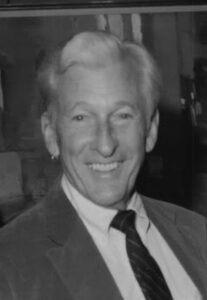
 The success of the first cold-mold attempt led to more experimentation. Long-time customer Pete Widener was intrigued by the new hull and ordered a 36' express built in the same manor."Jet Stream" was launched in 1961 and again proved to be lighter and faster than similar conventionally planked boats. Palm Beach Sportsman James Kimberly was equally impressed and gave Tommy the order to build a 50' sportfisherman using the new technique. "Blue Fox" was launched in late '61 and set the stage for eventual conversion of all new hulls within the next seven years. The last plank-on-frame boat built by Tommy Rybovich was David Lake's "OLE", launched in 1968.
 During the late fifties, after developing the fighting chair, aluminum outriggers, the Tuna-tower, and the Tuna-door, Johnny's interests returned to the fishing he so loved. The yard was humming along nicely—Tommy and Emil were making sure of that. The boats that bore his name were, and would continue to be, the envy of the sport-fishing community. Johnny began to look at what effect the popularity of Atlantic sport-fishing combined with the growing commercial harvest was having on local waters. He had always been a conservationist at heart. In 1950 he had helped found the Sailfish Conservation Club of the Palm Beaches to promote the successful release of Sailfish. His first date with his wife years before had found them offshore, catching Kay her first Sailfish. Much to her disappointment, Johnny insisted on releasing the fish, depriving her of bragging rights back at the dock. Kay got the message, though, and went on to co-found the IWFA with Ginni Sherwood and Dennie Crowninshield, championing her own cause for conserving the oceans resources. The ladies liked to joke that IWFA didn't really stand for the International Women's Fishing Association but rather " I Will Fish Also". Kay did keep one sailfish when it was thought to be a women's word record. Johnny reluctantly agreed to keep the fish for weighing and measurement and as it turned out Kay just missed the record.
 In 1963, after several years of planning and refining, Johnny founded the Master's Angling Tournament. Sponsored by The Sailfish Club in Palm Beach, it was the first of its kind. The all-release tournament rules were devised to make the anglers' skill count as much as possible and to maximize the chances of the fish's survival. Anglers were not permitted to fish their own boat, and fished a different boat each day. All anglers fished identical 20 lb. Dacron line, and a marker was secured to the line 100 yards from the leader. As long as the marker was between the rod tip and the fish, the boat could be maneuvered to accommodate the angler. As soon as the marker reached the tip of the rod, the boat must be dead in the water unless it was necessary to move forward to keep a fish from moving under the boat. Upon hook-up, each fish was worth 100 points. After 10 minutes the angler began to lose points at the rate of five points per minute until, at the end of thirty minutes, he had no points at all. The tournament was a huge success with the average time to boat a sailfish at 8.7 minutes. First place and the title of Master Angler for the inaugural event went to James Baldwin. The world's most prestigious Release Tournament to date had been born that year, thanks to Johnny.
In 1966 Johnny introduced the "Tournament of Champions", which was a tournament designed to raise money for conservation. At the end of the competition each year, the winner would decide on what conservation project his winnings should be spent. Early sonic tagging experiments on billfish were paid for through funds realized through that tournament. Throughout the 60s, the continued decline in local fishing stocks was a cause for great concern with Johnny. It was clear to him that the mortality rate of sailfish hooked and released on live bait was much higher than those released on dead bait. In 1972 Johnny founded the Gold Cup Tournament, which awarded significantly more points for fish caught on dead bait. These tournaments and a great deal of research projects were born out of Johnny's love and respect for the sport on which he had built his family's business, and for the cause of marine conservation to which he dedicated the last 30 years of his life.
 While Johnny was becoming increasingly involved with conservation efforts, Emil began to devote more time to his two favorite pastimes outside the family business. Flying had always been his first love. He had entered the Army Air Corps to fly for his country, but a vision problem had kept him from passing the flight physical. Soon after his discharge, he earned his civilian wings. In the late fifties, Emil convinced his brothers that to better serve their customers, the yard should have an airplane. Rybovich loyalty and service to their customers had become well known. With an airplane, customers in trouble far from home could have parts or mechanics flown in, making Rybovich service second to none. Johnny and Tommy agreed. They bought a Republic SeaBee seaplane, and Emil assumed the duty of "flying mechanic", rescuing those in need and loving every minute of it. Emil flew the airplane and a second SeaBee for ten years before corrosion from saltwater operation finally consumed the flying boats.
 His other love was fishing. Not so much the offshore variety that his brother so enjoyed, but more the inshore variety. He still holds several records at the West Palm Beach Fishing Club. His interest in Tarpon fishing gave him an idea that proved to be another Rybovich innovation. Emil wanted a small boat that would provide him speed and stability with a shallow draft and an uncluttered cockpit from stem to stern. He couldn't find what he wanted and so decided to build one. Built as a prototype center console in 1961, the boat was a forerunner to what Mako, Aquasport, Seacraft, and many others would become famous for in the ensuing years. When Emil explained his concept to his curious brother, Tommy replied "who would want such a boat—that's asinine". Emil promptly lettered the stern of his new creation with his brother's observation, "ASININE". He sold the boat to a yard customer and built and sold three more in the next two years. The original name before sale on each transom was "ASININE".
 The forties and fifties had been a time of great innovation at Rybovich and Sons. The innovation certainly continued in the next decade, but on a smaller scale. For Tommy Rybovich, the sixties were a time for refining the design. While Johnny and Emil had interests that provided a means of escape from the long hours required to maintain the standard of excellence on which the yard continued to thrive, Tommy wanted no such distraction. His idea of the perfect day off was carving and testing new bottom shapes. With diesel engines being offered with more horsepower and in more compact dimensions, the speeds were increasing. Emil, being the chief mechanic, spent more time running the boats than his two brothers and was the first to realize that modifications were needed to keep the boats comfortable at higher speeds. His suggestions to Tommy for adapting a more convex bottom section to keep the boats from pounding fell on deaf ears. Tommy never ran or even rode on the boats, once they hit the water, and could not understand or would not admit to the need for a change. Any attempt by Emil to approach the subject with Tommy usually ended in the brothers not speaking with each other for extended periods of time. Acquiring the services of a new draftsman and in-house naval architect would help to change all that.
 Giovanni Cardelli worked well with Tommy. Hargrave's frustration with Tommy stemmed from Tommy's total disregard for the formal design process. Cardelli understood Tommy's genius and figured out early on how to adapt science to art. The two men would discuss modified planning shapes and Tommy would carve a model. They would then tow the models from a Boston Whaler on a makeshift boom with a scale attached to measure resistance and observe the trim angle. When they were satisfied with the model's performance, Tommy would incorporate the lessons learned into the next hull. After the hull was built, Cardelli would take the lines off the completed hull and draw the lines and body plan accordingly. This unique method of recording the naval architecture worked well for Tommy and the collaboration between the two men continued until Tommy's death in 1972. During this period, Tommy would design and build the most beautiful and perfectly proportioned sport-fishing boats the world had ever seen. Examples of this legacy can be seen in Herb Clofine's "AMIGO" in 1965, Floyd Gottwald's "ANNABET" in 1968, and Paul Levitan's "LITTLE PETE" which was finished, after Tommy's death, in 1973.
 It is interesting to note that the boat on which Tommy and Cardelli spent the most time designing and testing was the boat that Tommy had the least to do with finishing. In the late sixties, George Hepworth approached Tommy about building a large motoryacht. Early in the discussions, Tommy expressed his interest in powering the boat with a pair of gas turbines. The low weight to high horsepower ratio and compact size would provide an impressive cruise speed for a vessel of 70-75' and allow for more room inside with a low profile. Tommy set about designing a hull around the turbines and the customer's accommodation requirements and with Cardelli's help built and tested a scale model more thoroughly than any previous hull. When he was satisfied with the design, construction began on the 75' cruiser. With the planking underway, Johnny expressed his reservations to Hepworth about turbine power. It would require large amounts of not-so-readily available Jet Fuel, how in the hell would they get enough air to vent the engine room, and who was going to service the engines? The two men decided it would be far more practical to install conventional diesel power. Upon hearing of their decision, Tommy turned to Johnny and said "you finish it" and walked off the job. The boat was eventually finished for another customer in 1973 after Tommy's death. The hull turned out to be the most efficient design that Tommy ever produced, with a cruise speed of over 20 knots from a pair of 485hp GM1271Ns.
 Pop Rybovich passed away in 1970. The Slovak immigrant could never have dreamed of the impact his small commercial fishing yard would have on the boating world. With the premature death of Tommy Rybovich from cancer in 1972, the soul of the yard was lost. His unparalleled devotion to his work had kept the yard on the leading edge of sportfishing boat design and finish work. As Emil would recall: "Nobody could work like Tommy". As it turned out, nobody else could build a Rybovich either. Tommy's death left a vacuum that try as they may, his brothers could not fill. It became increasingly apparent that project time and costs would increase exponentially with his absence. Interestingly enough, neither Johnny nor Emil had the knowledge to draw a set of lines or build one of their hulls. Their respective contributions had been every bit as important to the success of the yard, but the actual design and construction of the boats had been a given. That part had always been Tommy's job in the organization.
 Hull #77, "LITTLE PETE", was the last boat set up by Tommy. Emil made sure she was finished to his late brother's impossible standards, and with help from Johnny and New England shipwright Bill Jackman, he completed two more boats, Mead Johnson's "WHITECAP" in 1974, and "SWAMPFOX" for Buck Fulp in 1976. The day-to-day challenges at the yard without Tommy, along with familial and financial concerns, eventually proved too great for the surviving brothers and the yard was sold in 1975. Rybovich and Sons survived through four subsequent ownerships until 2010 when the great recession forced an end to new construction.
 Building a legacy, like building a boat, is a long process when done right. Hard work and an unrelenting commitment make up about half of what is required. The other 50% is just plain luck, or as Johnny once said, "We were in the right place at the right time and with a good idea and a few simple tools we could make something useful". My father, Emil, being a bit more colorful, used to say it was just bull---- luck. The fact that one family created an entire industry 60 years ago and whose products are still the industry standard today seems to beg for a more flattering explanation. Alas, the Rybovich product has always spoken for itself in performance and quality. There has never been much need for embellishment.
If building a legacy is akin to building a boat, maintaining a reputation as renowned as Rybovich's is like maintaining that boat. To keep the boat tuned and polished requires great care and attention to detail. Without it she'll quickly fall into disrepair. Since the sale of the yard in 1975, Rybovich has been through four defining changes in ownership. As with any company, things inevitably change when a new owner assumes control. Taking the reins of a business with a reputation for uncompromising quality and customer satisfaction is an honor and a privilege. It is also a daunting responsibility. Some folks rise to the challenge. Others are intimidated by the magnitude of hard work and lose interest. The fact that Rybovich has survived for almost 45 years after the death of Tommy is a testament to the strength of the name and the passion associated with it. Johnny, Tommy, and Emil developed their respected aesthetic and performance standards by making subtle changes from one hull to the next, being ever mindful of their customer's requests for better fishing boats. We continue to subscribe to the same philosophy: listen, think, and create. We are here to build a better boat. It's as simple as that.
 In the summer of 1984, after having survived new ownership at the yard for nine years, I left Rybovich and started a new boat building venture with my father Emil, and my brother Marty Evans. I was young, single, and independent enough to be able to walk away. Dad had been out of the yard for four years, doing consulting work and marine surveying and he was anxious to get back to the creative side of the business. Marty had been in residential construction for many years and had both the talent and creative genes for boat building along with a yearning to take his abilities in a new direction. We partnered with close family friend, Ed Bussey, and formed Rybovich International in the fall of 1984. I built several models to test a few new ideas that Dad and I had been discussing about how to achieve a better ride at higher speeds while still maintaining the stable fishing platform.
 Together with our former yard mechanic, Curt Wills, and Gary Hilliard (who would later return to Rybovich to build boats for two successive yard owners), we set up the first hull for Charlie Bouchard, an avid tuna and sailfisherman who wanted a boat he could fish himself. That first hull with the new company, a 32' walk-around design, was based on a concept that friend and legendary angler Nick Smith had applied to a 30' Daytona hull. She was powered with a single 3208 CAT, and with the new bottom she could fish in rough water alongside boats twice her size and never miss a lick. I have often wished that I could have bottled the excitement of that first sea trial to spray on myself from time to time when things get complicated. We talked of producing a mold from the first hull and venturing into semi-production but the orders for new boats kept us busy and we were never really in a position to afford the tooling costs.
 Each new order produced a larger boat than its predecessor. By the mid 1990s we were building a 60' sport fisherman under the name RYCO MARINE and had outgrown our little shop. We eventually moved back to the waterfront in 2001 and added a service business to our boatbuilding operation. Things were going well until Hurricane Wilma destroyed our building in 2005 but miraculously spared the three hulls we had under construction at the time. Meanwhile, Florida businessman Wayne Huizenga, Jr. had purchased the original Rybovich yard in 2004 and a year later was in need of a management team to run its boat building division. For our part, we needed a roof over our heads. In late 2005 we merged with his company to form the new Rybovich & Sons, finally bringing the family and the name together again some 30 years after the original sale of the company.
 For the next four years the new company flourished, surviving still another move from the yard in West Palm Beach to make room for a world-class super yacht marina and repair yard now occupying the original homestead. During this time, at the 20th street site in Riviera Beach, Rybovich & Sons delivered five boats from 54 to 78 feet, the last two being the largest ever built under the family name. New challenges for the company became apparent in late 2008. As the world recession deepened, the once full order book became an empty testament to the bad economy. In the early 2010, management was forced to make several difficult decisions, including shelving new construction altogether to focus on the development of a full-service marina at the Riviera Beach site. Facing the end of the creative process with Rybovich & Sons, I was forced to re-think the partnership and after much prayer and lively debate, made the decision to leave the company and to proceed on my own with a new company, Michael Rybovich and Sons.
 The construction techniques at Rybovich today are similar to those used in the later years of Tommy's career. Although we have experimented with building in composites and will continue to do so, we still enjoy the creative freedom and superior strength-to-weight ratio provided by one-off cold molding. As lighter weight materials are introduced in the industry, we continue to incorporate them into various areas of our boats. In doing so, we believe we are combining the best that modern material technology has to offer with the soul and pride associated with something handmade. As available horsepower has steadily increased, the speeds and respective stresses on the hulls have also increased proportionately. In accommodating these changes, our hullform has evolved into something quite unique to the industry and in which we take great pride. Even in a typical January head sea, today's Rybovich boats deliver a dry ride of astonishing smoothness which provokes wide smiles on the faces of the crews that run them.
"We continue to subscribe to the same philosophy—listen, think, and create.
We are here to build a better boat. It's as simple as that."
 As the coastal Atlantic fisheries decline, sportsmen have become accustomed to traveling further from home in search of gamefish. This requires more fuel and fresh water capacity, better accommodations, and more storage. It should also be noted that as most sportsmen of the past wanted to go fishing to get away from it all, today's sportsman wants to take it all with him. Air conditioning, large capacity refrigeration, laundry facilities, the latest in a/v equipment and home theater, internet service, onboard desalination, scuba gear, and much more are all a part of the requirement for more interior volume. In other words, bigger boats.
 The average length for a Rybovich in the 1950s was around 40'. In the 1960s that number would increase to 50'. When the second Little Pete was launched for Paul Leviton in 1973 at 58 feet, we all thought that was about as big as you could get and still legitimately fish the boat. The average size of today's custom sport fisherman is around 70' and still increasing. Amazingly enough, anglers and crews have adapted easily to the complexity of larger boats. With more power from new engine technology, they've had little problem maneuvering on a fish, just as they would from a 43-foot boat of four decades ago. It remains to be seen how far this trend will go, but the bar is being raised on a daily basis.
 At the new Michael Rybovich & Sons, we have been blessed with a crew of excellent craftsmen who produce the fine work that continues to provide our customers with the pride of ownership associated with the Rybovich name since Miss Chevy II was launched in 1947. It now appears as if the next generation will take its turn defending the Rybovich name. My son, Dusty, a graduate from Webb Institute for Naval Architecture and Marine Engineering in New York, is the first of all the Rybovich offspring to have a formal education in the family business. My stepson Alex Gill has also joined the business as head of the mechanical department. We are extremely proud and expect great things from them. It is a privilege for all of us to be able to create something which, if given proper care, will long outlive us. The three original brothers knew that feeling well, and we couldn't ask for more.

Anna Pollack, wife of John Rybovich, Sr.

An early print ad for the boatyard

Aftermath of the September 16, 1928 hurricane

Converting existing cruisers to sportfishing boats by adding outriggers, fishing chairs, gunwale mounted rod holders and topside-mounted controls.

The old Rybovich Boatyard in West Palm Beach

Zane Grey

Michael Lerner

Kip Farrington

Tommy Gifford with a Blue Marlin

The Cass Brothers with a shark-eaten Tuna

Lloyd Knowles and the Knowles Tuna Reel
Lloyd Knowles and the Knowles Tuna Reel

Ernest Hemingway fishing for Bluefin Tuna

Fred Grieten, developer of the Fin-Nor reel

The Fin-Nor big game fishing reel

Frank O'Brien, designer of the Tycoon Bimini King rod

Tommy Rybovich (circled) with crew and battered B-17

Emil's World War II patrol boat

John Rybovich with Charlie Johnson (seated)


Clari-Jo (hull #2), renamed Legend, built in 1949

Charles Johnson

Miss Chevy IV (hull #8) built in 1952

Georgia May (hull #19) launched in 1955

Horace Dale Critz

Charles Johnson

John Rybovich and Ernest Hemingway (2nd & 3rd from left) in Havana, 1956

Gasoline engine

Tireless (hull #28) launched in 1957

Emil Rybovich with the fiberglass "blister"

Fiberglassing the hull

The cold molding process

Rhino (hull #34) launched in 1959

Mahogany planking sliced to 3/8"

Stiff one-piece wooden hull

Peter A B Widener, horse breeder and sportsman

Jet Stream (hull #47) launched in 1961
James H. Kimberly, sportsman, socialite and Kleenex heir

Fighting chair

Tuna tower

Tuna door

Kay Rybovich with Sailfish and husband John

Kay Rybovich, Ginni Sherwood and Dennie Crowninshield, founders of the IWFA

Trophy for the Master's Angling Tournament, sponsored by The Sailfish Club

The Sailfish Club in Palm Beach

The Republic SeaBee seaplane

The second Republic SeaBee

The West Palm Beach Fishing Club

Asinine, forerunner to the modern center-console fishing boat

John and Emil Rybovich

Tommy Rybovich towing a scale model with Giovanni Cardelli

Herbert Clofine

Amigo V (hull #61) launched in 1965

Annabet (hull #69) launched in 1968

Little Pete (hull #65) launched in 1967

Margaret (hull #73) launched in 1972

Emil Rybovich

Swamp Fox (hull #79) launched in 1976

Marty Evans

Ed Bussey

Gary Hilliard

Ruthie (hull #108) launched in 1985

Legendary angler Nick Smith

Ryco Marine in Riviera Beach FL

Damage from Hurricane Wilma in October 2005

A pair of 78' sportfishermen from 2009-2010

Miss Chevy II (hull #1) launched in 1947

The Webb Institute for Naval Architecture and Marine Engineering

